Home / Products / Rubber Conveyor Belts / Steel Cord Carcass
Rubber Conveyor Belts - Steel Cord
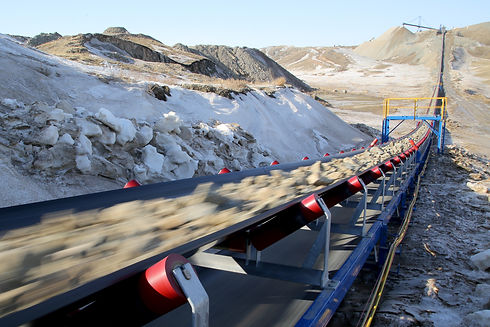
Our steel cord rubber conveyor belts are designed for high-tension, heavy-duty applications requiring strength, stability, and reliability. Reinforced with galvanised steel cords and premium rubber compounds, they provide low elongation, high tensile strength, and excellent resistance to impact, tearing, and wear for long-distance bulk material transport.


Steel Cord Specifications

ST Rating | Cord Diameter (mm) | Cord Construction | Cord Pitch (mm) | Rated Working Tension (N/mm) | Top Cover Thickness (mm) | Bottom Cover Thickness (mm) | Belt Weight (kg/m²) | Minimum Pulley Diameter (mm) | Cord Breaking Strength (kN per cord) |
|---|---|---|---|---|---|---|---|---|---|
ST 630 | 3 | 6×7 + 1WS | 10 | 90 | 5 | 5 | 20 | 800 | 6.93 |
ST 800 | 3.5 | 6×7 + 1WS | 10 | 110 | 5 | 5 | 20.6 | 800 | 8.8 |
ST 1000 | 4 | 6×7 + 1WS | 12 | 140 | 6 | 6 | 24.7 | 800 | 13.2 |
ST 1250 | 4.5 | 6×7 + 1WS | 12 | 175 | 6 | 6 | 25.4 | 800 | 16.5 |
ST 1600 | 5 | 6×19 + 1WS | 12 | 225 | 6 | 6 | 26 | 1000 | 21.12 |
ST 2000 | 6 | 6×19 + 1WS | 12 | 285 | 8 | 6 | 30 | 1000 | 26.4 |
ST 2500 | 7.5 | 6×19W + 1WS | 15 | 355 | 8 | 6 | 32.2 | 1250 | 41.25 |
ST 3150 | 8.1 | 6×19W + 1WS | 15 | 450 | 8 | 8 | 35.7 | 1400 | 51.98 |
ST 4000 | 9.1 | 6×19W + 1WS | 17 | 570 | 8 | 8 | 37.8 | 1600 | 74.8 |
ST 4500 | 9.7 | 6×19W + 1WS | 16 | 645 | 8 | 8 | 38.7 | 1800 | 79.2 |
ST 5000 | 10.9 | 6×19W + 1WS | 17 | 715 | 8.5 | 8.5 | 41.9 | 1800 | 93.5 |
ST 5400 | 11.3 | 6×19W + 1WS | 17 | 760 | 9 | 9 | 43.9 | 2000 | 101 |
ST 6300 | 12.3 | 6×19W + 1WS | 18 | 900 | 10 | 10 | 48.3 | 2000 | 124.74 |
Optional Rip Protection

Installed between the top cover and steel cords, this reinforcement layer absorbs impact energy and improves resistance to punctures and slitting. It also helps prevent tears from propagating along the belt while maintaining flexibility and troughability.
Rubberised steel cord strips embedded transversely at regular intervals strengthen the belt against tearing caused by trapped materials or chute impact, helping to reduce the risk of catastrophic belt failure.